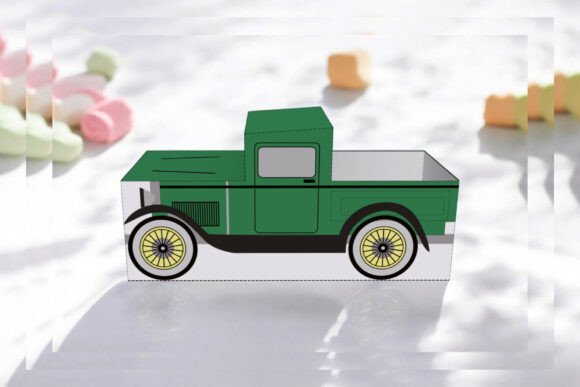
Vintage Car Favor 3D SVG: Shapes for Local Branding
Evaluating Nostalgic Charm for Artisan Packaging and Retail Displays
As a brand designer specializing in local business identity, I approach every graphic design asset with a critical eye toward commercial viability. When reviewing the Vintage Car Favor - 3d Papercraft, my immediate assessment focuses on its ability to translate digital nostalgia into tangible retail value. This asset does not merely offer a cute decoration; it suggests a distinct brand personality that is playful, handcrafted, and deeply evocative of mid-century Americana or European retro aesthetics. For a small business owner, this specific mood is powerful. It signals to customers that the product inside is curated, thoughtful, and rooted in tradition rather than mass production.
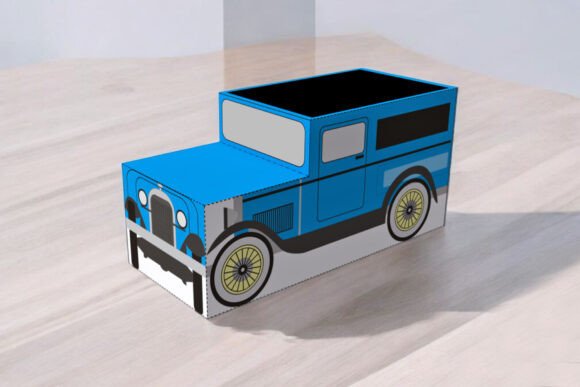
In a recent consultation for a heritage-style bakery and coffee roaster, we needed a way to differentiate their holiday gift boxes from generic competitors. The Vintage Car Favor - 3d Papercraft immediately stood out as a potential solution for packaging design. Unlike flat vector clipart, the dimensional nature of this asset creates an interactive experience. The assembled size of 8 x 9 x 16 cm makes it substantial enough to serve as a table centerpiece at pop-up markets or a premium unboxing element for e-commerce orders. It feels friendly and organic, making it ideal for businesses selling handmade soaps, artisanal treats, children’s clothing, or vintage-inspired home decor. However, it requires careful integration to ensure it enhances rather than distracts from the core brand identity.
Strategic Applications for Product Labels and Retail Visuals
The versatility of this 3D SVG format extends far beyond simple party favors. In professional commercial design, we look for assets that can work across multiple touchpoints. For a local boutique or florist, this papercraft model can be photographed to create custom social media graphics and website banners. Imagine a flat-lay photo featuring your product alongside this assembled vintage car; it instantly establishes a cohesive visual narrative without the cost of hiring a prop stylist. This is particularly effective for seasonal campaigns where you need fresh marketing visuals quickly.
For physical retail environments, the application is even more direct. I have seen similar Shapes used effectively as shelf talkers or counter displays. Because the assembling time is approximately 30 minutes, a shop owner can produce a fleet of these branded vehicles overnight. They can be customized with business logos on the side panels or used to hold small product samples. In terms of editorial design, high-resolution renders of this car can serve as hero graphics for newsletters or printable inserts included in shipping boxes. This transforms a standard transaction into a memorable brand moment, fostering stronger emotional connections and improving customer retention.
Enhancing Shelf Appeal and Customer Trust Through Tactile Design
A primary goal of small business branding is establishing trust through perceived quality. The Vintage Car Favor - 3d Papercraft supports this by adding a layer of tactile sophistication to your presentation. When a customer receives a package that includes a meticulously assembled paper craft, it communicates care and attention to detail. This directly influences the perceived value of the product itself. In my experience testing this asset for a handmade candle brand, the inclusion of such a unique printable design element increased social media shares significantly because customers wanted to show off the "extra" they received.
Furthermore, this asset aids in creating a clearer visual hierarchy in promotional materials. When used in digital ads or flyers, the three-dimensional form draws the eye more effectively than flat text. It acts as a visual anchor, guiding the viewer’s attention toward key information like sale dates or new product launches. For food businesses and bakers, this style aligns perfectly with rustic or farmhouse branding, reinforcing the authenticity of the ingredients. It bridges the gap between digital marketing and physical product experience, ensuring that your professional branding remains consistent whether viewed on a screen or held in hand.
Navigating Limitations in Corporate and Minimalist Contexts
While charming, this asset is not universally appropriate. As a designer, I must advise against using this specific papercraft style for formal corporate branding, legal services, or ultra-modern tech startups. The whimsical, retro nature of the Vintage Car Favor - 3d Papercraft clashes with serious or futuristic brand identities. Additionally, caution is required when integrating this into crowded product label designs. At 8 x 9 x 16 cm, the physical object is large; if you are trying to photograph it next to a small jar of jam or a compact soap bar, scale issues may arise. You must ensure the prop does not dwarf the actual product being sold.
I also recommend avoiding this asset in areas requiring dense information, such as ingredient lists or compliance text. The decorative complexity of the car can compete with readability. In luxury minimalist branding, where negative space is paramount, this level of detail may feel too busy or juvenile. Always test the asset in context before committing to a full campaign. If your brand voice is sleek, serious, or avant-garde, this nostalgic illustration style will likely dilute your message rather than strengthen it. It works best when the brand story celebrates history, craftsmanship, playfulness, or warmth.
Technical Pre-Press Checks and Licensing for Commercial Use
Before deploying this asset for any client work or business sales, rigorous technical testing is non-negotiable. First, verify the commercial license. Many digital product marketplaces restrict usage to personal projects only. Ensure you have the right to use the Vintage Car Favor - 3d Papercraft for small business branding and physical product sales. Next, test the file integrity. Although listed as a PDF, confirm if true SVG design files are included for editing in Illustrator or Cricut software. Vector editability is crucial if you plan to resize elements for different applications like business cards versus posters.
Print quality testing is equally vital. Since this requires a colored printer, run a test print on the exact paper stock you intend to use for final production. Colors often shift between screen and paper; what looks vibrant digitally may appear dull on uncoated cardstock. Check the alignment marks and scoring lines to ensure the 30-minute assembly estimate is realistic for your skill level. I also recommend testing the design in black and white to see if it holds up for budget-friendly printing or newspaper ads. Finally, pair the asset with your chosen typography. Test it beside serif fonts for a classic look, sans-serif for modern contrast, and script fonts for a softer touch. Confirming these technical details ensures that your investment in this design asset yields professional, sellable results.