Groovy Mama’s Day 3D Shadow Box Review
As a designer who has stitched out thousands of files for both personal joy and commercial client work, I approach every new machine embroidery design with a healthy dose of skepticism. We have all downloaded files that look stunning on screen but turn into thread nests or registration nightmares on the hoop. When I first opened the Groovy Mama s Day 3D Shadow Box file, I wasn't just looking for retro aesthetics; I was evaluating structural integrity for real-world application. This isn't just a digital asset; it is a blueprint for a physical product that needs to withstand washing, wearing, and gifting.
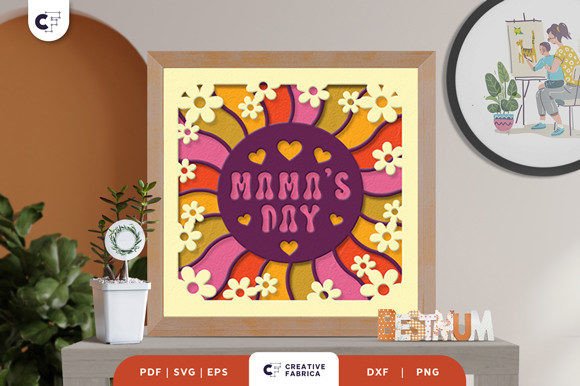
The immediate impression of this design is its successful capture of that specific ‘80s nostalgia without feeling like a costume. The circular layout is deceptively simple. In embroidery, circles are unforgiving. Any tension issue or stabilizer failure shows up immediately as a gap or a pucker along the curve. However, the Groovy Mama s Day 3D Shadow Box utilizes an intertwined element strategy that acts as a natural registration aid. For those of us running craft business operations or managing Etsy seller listings, this matters because it reduces the margin for error during production. The "3D" aspect here refers to the layered depth achieved through precise stacking, likely intended for shadow box framing or layered cardstock applications, but as an embroiderer, I see massive potential for translating this depth into textured fabric projects.
Real-World Application: The Custom Sweatshirt Test
To truly judge this embroidery file, I mentally placed it onto a heavyweight cotton fleece sweatshirt, which is currently the gold standard for custom apparel in the handmade market. Imagine preparing a personalized Mother’s Day gift for a boutique drop. The Groovy Mama s Day 3D Shadow Box features intricate intertwining details that suggest a mix of satin stitch borders and fill stitch interiors. On a sweatshirt, this combination provides necessary coverage without creating a bulletproof patch of thread that distorts the drape of the garment.
I envision using this design centered on the chest of a cream or pastel hoodie. The retro vibe demands specific thread colors—think muted teals, warm mustards, and dusty roses rather than neon primaries. Because the design is circular and self-contained, it serves as an excellent focal point. For a small shop product, this versatility is key. You aren't limited to apparel; this size and shape translate beautifully to a tote bag design or even a decorative pillow cover. The "shadow box" concept implies layers. If you are creating a physical shadow box gift, this SVG cuts cleanly for paper layering. If you are adapting it for embroidery, consider using felt or velvet appliqué for the background circles to mimic that dimensional shadow effect physically. This elevates the finished product from a basic embroidered item to a premium mixed-media piece.
Fabric Limitations and Stabilizer Strategy
While the Groovy Mama s Day 3D Shadow Box is versatile, my professional assessment warns against using it blindly on all substrates. The intricacy of the intertwined elements means there is significant stitch density in specific zones. If you attempt this on thin, stretchy jersey knit without adequate support, the fabric will tunnel between the design elements.
- Avoid Sheer Fabrics: The density required to make the 3D effect pop visually will likely overwhelm lightweight voile or organza. Stick to stable wovens or heavy knits.
- Textured Fabric Caution: While terry cloth and minky are popular for baby embroidery, the fine details in this groovy design might get lost in the pile. If stitching on high-loft fabric, use a water-soluble topping to keep the stitches crisp.
- Stabilizer Selection: For the best results on apparel, use a cut-away stabilizer. Tear-away is rarely sufficient for designs with this level of interconnected geometry, as the removal process can distort the circular shape.
- Hooping Technique: Ensure your hoop size allows for at least an inch of clearance around the design perimeter. Floating this design is risky due to the registration needs of the 3D layers; hoop the fabric and stabilizer together whenever possible.
Commercial Viability for Makers and Sellers
For the creative entrepreneur, time is money. A design that requires three re-hoops and constant trimming is a profit killer. The Groovy Mama s Day 3D Shadow Box appears optimized for efficiency. The circular containment makes it easier to center on garments compared to sprawling script designs. This predictability is vital when producing bulk orders for holiday markets or fulfilling custom requests.
From a marketing perspective, this design hits the sweet spot for Holidays specifically targeting mothers. It avoids the saccharine clichés often found in maternal merchandise, offering instead a cool, vintage aesthetic that appeals to modern moms. When creating printable mockups or listing photos, the distinct shape photographs well. It reads clearly even in thumbnail sizes on mobile devices, which is crucial for buyer engagement. However, always verify your licensing. Before listing this as a digital embroidery file or selling finished goods, confirm whether your purchase includes commercial rights for physical products versus digital redistribution. Protecting your business starts with respecting intellectual property.
Designer Notes for Optimal Stitch-Out
Before you commit this 3D SVG to a final project, treat it with the same rigor as any professional design assets. My testing protocol for the Groovy Mama s Day 3D Shadow Box includes several non-negotiable steps:
- Run a Black and White Test: Ignore color initially. Stitch the design in black thread on white fabric. This reveals the true structure and highlights any gaps in the running stitch alignment or satin column overlaps that color changes might hide.
- Check Small Details: Inspect the thinnest parts of the intertwined elements. If they are under 2mm wide, ensure your machine’s needle size matches. A 75/11 needle might shred the fabric in tight corners; a sharper 70/10 might be safer.
- Contrast Verification: Retro palettes often rely on low contrast. Test your chosen thread colors against your fabric in natural light. What looks good on a backlit monitor might disappear on beige linen. Ensure the design maintains legibility.
- Wash Test: If this is destined for a tea towel or baby bib, wash and dry the test sample aggressively. Does the 3D layering hold up? Do the edges fray? This data informs your care instructions for customers.
- Mockup Reality Check: Create a digital preview using the actual stitch file, not just the vector art. Customers need to see realistic texture expectations, especially for a design marketed with "3D" terminology.
Final Verdict on Usability
The Groovy Mama s Day 3D Shadow Box stands out as a thoughtful intersection of digital crafting and traditional needlework. It respects the limitations of the medium while pushing the aesthetic boundaries of holiday decor. For the handmade product seller, it offers a fresh alternative to generic floral motifs. For the hobbyist, it provides a satisfying challenge in layering and color blending.
Success with this file lies in preparation. Respect the stitch density, choose your fabric texture wisely, and honor the retro spirit with authentic color choices. Whether you are building a layered paper shadow box or stitching a heirloom-quality sweatshirt, this design has the bones to become a staple in your collection. Just remember: the "3D" effect is an illusion created by precision. Take the time to calibrate your machine, test your materials, and the Groovy Mama s Day 3D Shadow Box will deliver that perfect ‘80s vibe with professional-grade durability.