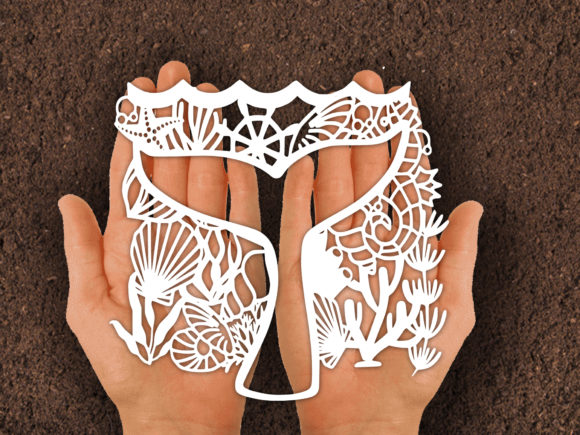
Mermaid Tail Paper Cut SVG: Graphics & Print Templates
Evaluating Whimsy for Professional Brand Identity Projects
When reviewing a new graphic design asset for a client project, my first criterion is always versatility within a specific niche. Recently, while developing a visual identity for a boutique children’s book publisher and an accompanying line of nursery decor, I evaluated the Mermaid Tail Paper Cut SVG. The immediate impression was one of tactile nostalgia. Unlike flat vector illustrations that can sometimes feel sterile or overly digital, this asset captures the essence of traditional paper crafting. The layered aesthetic suggests depth and shadow, creating a mood that is both playful and artisanal. For a designer tasked with bridging the gap between digital marketing and physical products, this style offers a unique texture that feels handmade yet remains scalable for professional use.
This specific asset targets a very distinct emotional response. It does not scream "corporate" or "tech"; instead, it whispers "storytelling" and "craft." In the context of small business branding, particularly for Etsy sellers or creative marketplaces, this distinction is vital. The design carries an inherent warmth that aligns perfectly with audiences seeking authenticity. However, as with any stylized illustration, its success depends entirely on appropriate application. It is not a universal solution, but rather a specialized tool for brands that prioritize imagination and tactile beauty over minimalist efficiency.
Integrating Layered Vectors into Packaging and Editorial Design
In my recent case study involving a fantasy-themed product launch, the Mermaid Tail Paper Cut SVG proved most valuable in packaging design and editorial layouts. We utilized the SVG file to create a custom window cutout effect on product boxes, leveraging the intricate lines to guide the die-cutting machinery. Because the file includes clean vector paths, it translated seamlessly from screen to production without the jagged edges often associated with rasterized clipart. This dual functionality—as both a visual graphic and a functional manufacturing template—is what elevates it above standard decorative elements.
For editorial design and blog visuals, the asset served as an excellent anchor for feature articles. When designing Pinterest pins and Instagram carousels for the campaign, the paper-cut style provided necessary visual weight. Social media feeds are saturated with flat graphics; the simulated shadows and layers of this mermaid tail stopped the scroll by offering a sense of three-dimensionality. We paired it with soft, textured backgrounds to enhance the illusion of real paper. This approach transformed standard marketing visuals into immersive brand experiences, reinforcing the narrative quality of the client’s merchandise.
Furthermore, this asset shines in printable design applications. For clients selling digital downloads or physical stationery, the inclusion of PDF and EPS formats ensures high-fidelity output. We tested the design on premium cardstock for wedding invitations and nursery wall art. The intricate details held up beautifully at larger scales, making it ideal for home decor projects where fine lines matter. The ability to manipulate individual layers in vector software allowed us to adjust colors to match specific seasonal palettes without losing the integrity of the original creative design.
Navigating Visual Hierarchy and Contrast Limitations
Despite its charm, the Mermaid Tail Paper Cut SVG requires careful handling regarding visual hierarchy. During the logo exploration phase, we discovered that the complexity of the paper-cut style competes heavily with typography. If used as a primary logomark alongside a detailed serif font, the result becomes illegible at small sizes. This asset works best as a supporting element or a standalone icon rather than a component of a dense wordmark. Designers must resist the urge to overcrowd the layout; the beauty of this SVG design lies in its negative space and silhouette.
Contrast is another critical factor. Paper cut aesthetics rely on the interplay of light and shadow. When placed on busy or low-contrast backgrounds, the definition vanishes. In our testing for t-shirt design and sublimation design, we found that solid, muted backgrounds yielded the best results. High-saturation neon colors tended to flatten the image, negating the paper-craft illusion. Additionally, for web design hero sections, we had to ensure the file size was optimized. Complex vectors with hundreds of anchor points can slow down page load times, so simplifying the path data for web use while retaining the full-resolution version for print was a necessary workflow adjustment.
It is also important to note where this asset should be avoided. For corporate annual reports, legal documents, or ultra-modern tech startups, the whimsical nature of a mermaid tail paper cut may undermine professional authority. It signals "fantasy" and "leisure," which can clash with brands aiming for seriousness or clinical precision. Understanding these boundaries is essential for maintaining brand consistency and ensuring the digital product supports rather than distracts from the core message.
Technical Validation and Commercial Licensing Checklist
Before committing this asset to a paid client project, I run through a rigorous technical validation process. Reliability is just as important as aesthetics. Below is the practical checklist I use when evaluating design assets like the Mermaid Tail Paper Cut SVG for commercial viability:
- Vector Integrity Test: Open the SVG and EPS files in Adobe Illustrator or Affinity Designer. Zoom in to 6400% to check for stray anchor points, open paths, or overlapping shapes that could cause issues during vinyl cutting or printing. Clean geometry is non-negotiable for Cricut project compatibility.
- Format Versatility: Verify that the bundle includes all promised formats. The presence of DXF files is crucial for Silhouette Cameo users, while PNG files with transparent backgrounds are essential for Canva template integration and sticker design. Ensure the PNG resolution is at least 300 DPI for print-on-demand quality.
- Monochrome Adaptability: Test the design in solid black and white. A strong graphic design asset must hold its shape without relying solely on color differentiation. If the silhouette becomes unrecognizable in single-color mode, it will fail in embroidery or single-color vinyl applications.
- Typography Pairing: Experiment with various font styles. Script fonts can complement the organic curves of the mermaid tail, while bold sans-serifs provide modern contrast. Avoid highly decorative display fonts that mimic the complexity of the illustration, as this creates visual vibration.
- Licensing Verification: Always review the commercial license terms before use. Confirm whether the asset allows for end-product sales (like printed mugs or shirts) versus digital redistribution. For Etsy product listings, ensure you are compliant with platform policies regarding derivative works.
- Mockup Reality Check: Never approve a design based on screen view alone. Place the asset on realistic product mockups to gauge scale and texture. What looks delicate on a monitor might appear clunky on a ceramic mug or too faint on a kraft paper bag.
Final Verdict for Creative Professionals
The Mermaid Tail Paper Cut SVG is a robust addition to a designer’s library, specifically for those operating in the handmade business, publishing, or event styling sectors. Its strength lies in its ability to bridge the digital and physical realms, serving equally well as a social media graphics element and a precise cutting template. While it demands thoughtful placement and respect for visual hierarchy, the payoff is a rich, emotive aesthetic that generic vectors cannot replicate. For professionals looking to add a layer of storybook magic to their brand identity work, this asset delivers tangible value, provided it is applied with intention and technical diligence. It transforms standard Print Templates into memorable keepsakes, proving that even in a digital-first world, the allure of crafted texture remains a powerful design strategy.