Bluetooth Icon 3D Papercraft: An Embroidery Review
As a designer who constantly bridges the gap between digital assets and tangible textiles, I approach every new file with a specific question: will this actually translate to thread? When I first opened the Bluetooth Icon- 3d Papercraft files, my immediate reaction was one of intrigue mixed with professional caution. This is not your standard flat vector; it is a geometric, faceted interpretation of a ubiquitous symbol. For those of us in the Lifestyle And Hobbies sector, this design offers a unique aesthetic that breaks away from the typical rounded, corporate look of standard tech icons. However, translating a 3D papercraft style into a machine embroidery design requires a thoughtful strategy regarding texture, density, and end-use application.
First Impressions: Geometric Precision Meets Textile Reality
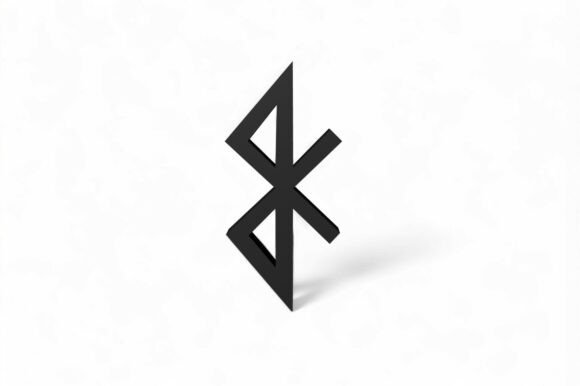
The visual personality of this Bluetooth icon is distinctly modern and architectural. Unlike traditional embroidery files that rely heavily on smooth satin stitches or organic curves, this design mimics the folded planes of paper craft. The provided formats—PDF, DXF, EPS, PNG, and JPG—are excellent for print and laser cutting, but as an embroiderer, I am looking at the PNG and EPS to visualize stitch placement. The sharp angles and low-poly aesthetic suggest a move toward fill stitches rather than satin columns. This creates a mood that is technical yet handcrafted, perfect for makers who want their tech accessories to feel more human and less industrial.
For a creative entrepreneur or Etsy seller, this distinct style is a differentiator. It does not look like a generic clip-art digitization. Instead, it carries the DNA of a handmade product, even when executed by a multi-needle machine. The challenge, and the opportunity, lies in respecting those crisp papercraft lines without letting the fabric distort them.
Real-World Application: The Tech Organizer Tote Test
To truly evaluate this asset, I mentally prototyped it for a current client project: a custom canvas tote bag designed for a freelance audio engineer. She needed a tote bag design that signaled her profession without being boring. Standard Bluetooth logos felt too commercial, but this 3D papercraft version hit the sweet spot between professional and artistic.
In this scenario, the design serves as a focal point on natural cotton canvas. Because the original assembled size is quite large (28 x 4 x 13 cm), resizing is necessary for apparel or bags. I found that maintaining the aspect ratio is critical; squashing the geometry ruins the 3D illusion. On the tote, I envisioned using a variegated thread to accentuate the "folds" of the papercraft shape, enhancing the dimensional effect through color shifting rather than just stitch direction. This approach turns a simple icon into a conversation piece, increasing the perceived value of the finished product for boutique branding or personalized gifts.
Navigating Fabric Constraints and Stabilizer Choices
While the aesthetic is versatile, the execution demands respect for fabric physics. The sharp vertices of the Bluetooth Icon- 3d Papercraft are potential failure points on unstable materials. If you are planning sweatshirt embroidery or working with stretchy knits, you must use a high-quality cut-away stabilizer. The geometric nature of this design means there is no place for registration errors; if the outline shifts even a millimeter from the fill, the 3D effect collapses into a messy polygon.
I would advise extreme caution when using this on textured fabrics like terry cloth or fleece. The intricate facets can get lost in the pile. For baby embroidery or items requiring frequent washing, consider simplifying the internal detail lines or converting them to running stitches rather than dense fills to maintain softness and durability. Conversely, on smooth twill or denim, this design shines, allowing the stitch density to create actual physical relief that mimics the paper folds.
Commercial Viability for Makers and Digital Sellers
For digital product sellers and small shop owners, this file set offers dual utility. Beyond the physical embroidery, the included vector formats allow for crisp printable mockups. You can showcase the design on a website or social media with perfect clarity before a single needle penetrates fabric. This is invaluable for pre-selling custom apparel or validating market interest.
However, a crucial note for commercial users: always verify your licensing. While the file types support commercial production, ensuring you have the right to sell finished embroidered goods versus just the digital file is paramount for business integrity. Assuming you are cleared for production, this design works exceptionally well for embroidered patches. The bold shapes read clearly from a distance, making it ideal for caps, backpacks, or uniform branding for tech-adjacent businesses. The modern vibe also translates well to holiday embroidery for the tech-savvy recipient, offering an alternative to traditional seasonal motifs.
Designer Notes: Technical Checks Before Hooping
Before committing this design to a final project, run through this practical checklist to ensure professional results:
- Verify Hoop Compatibility: The native dimensions are substantial. Confirm your machine’s maximum hoop size and resize proportionally if needed. Distorting the geometry destroys the papercraft illusion.
- Test Stitch Density: Since this originates from a papercraft source, auto-digitized versions can be overly dense. Run a test sew-out on scrap fabric to check for stiffness or needle deflection.
- Contrast Check: Test the design in black and white mockups first. Ensure the facets remain distinguishable without relying solely on color contrast, especially for monochrome embroidery projects.
- Stabilizer Matching: Pair the stabilizer weight to the fabric, not just the design. Lightweight fabrics need tear-away or wash-away backing to prevent puckering around the sharp corners.
- Thread Selection: Consider matte threads over rayon. A polyester or cotton thread often complements the papercraft aesthetic better than high-sheen rayon, which can make the facets look plastic rather than paper-like.
- Licensing Audit: Double-check terms regarding the sale of finished products versus digital redistribution, especially if listing on platforms like Etsy.
Elevating Handmade Tech Accessories
The Bluetooth Icon- 3d Papercraft represents a fascinating intersection of digital precision and tactile craft. It challenges the embroiderer to think about structure and light rather than just coverage. Whether you are creating a signature piece for your craft business, designing merchandise for a tech startup, or simply making a unique gift for a gadget lover, this design brings a fresh perspective to a familiar symbol.
Success with this file comes down to honoring its origins. Treat it as a structural element, not just a decoration. By paying attention to stabilizer choice, thread texture, and geometric integrity, you can transform a digital papercraft concept into a stunning, durable textile reality that stands out in a saturated market. Always remember that while the file provides the map, your expertise as a maker determines the destination. Test thoroughly, stitch confidently, and let the unique facets of this design add a new dimension to your embroidery portfolio.