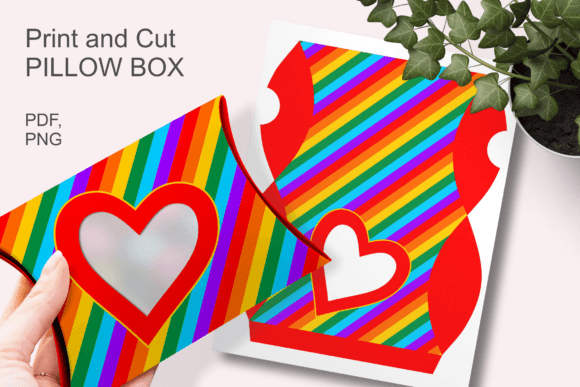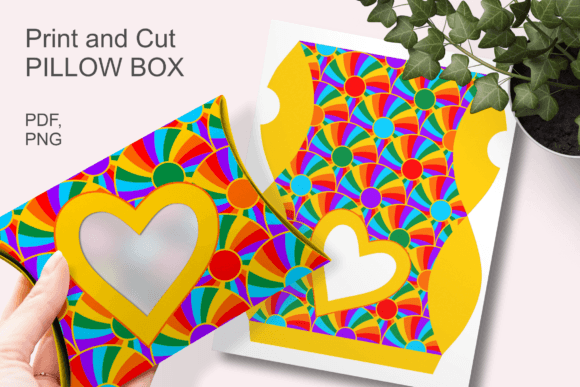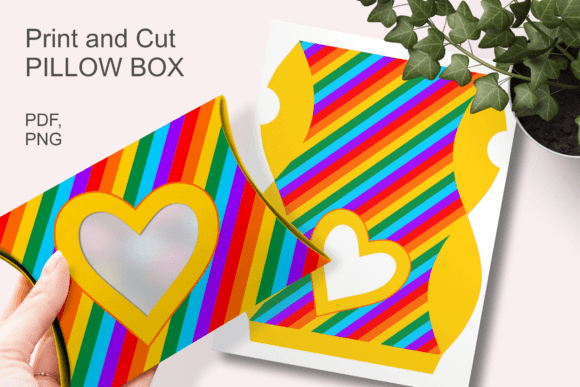
Blue N Rainbow Heart Window Pillow Box Review
As a designer who constantly bridges the gap between digital assets and tangible handmade products, I approach every new file with a specific question: will this actually work in production? When evaluating the Blue N Rainbow Heart Window Pillow Box, my perspective shifts from simple admiration to practical application. While this asset is categorized under Gift Boxes and formatted as a 3D SVG for print-and-cut machines, its visual architecture offers significant potential for mixed-media creators. For embroidery designers and small business owners, this template represents more than just packaging; it is a cohesive branding element that can be translated into stitched goods to create a unified product line.
Translating Digital Templates to Stitched Reality
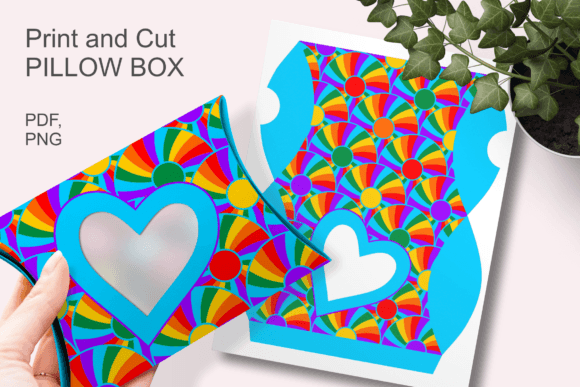
The first impression of the Blue N Rainbow Heart Window Pillow Box is one of playful precision. The geometric balance required for a functional pillow box translates surprisingly well to machine embroidery design. In my studio, I recently prepared a custom order for a baby shower boutique set. The client wanted embroidered bibs and onesies that matched their party favor packaging perfectly. Using this specific heart window motif as an applique design allowed me to mirror the exact aesthetic of their digital invitations and physical gift boxes.
The rainbow pattern provides natural color blocking opportunities for thread selection. Instead of viewing this solely as a paper craft file, I see a roadmap for satin stitch borders and fill stitch interiors. The heart window shape acts as a negative space guide, which is critical when designing embroidered patches or tote bag designs where clarity at a distance matters. For Etsy sellers and creative entrepreneurs, this crossover utility adds immense value. You are not just buying a box template; you are acquiring a verified shape that has already been tested for visual appeal in a commercial context.
Performance Across Fabrics and Finished Products
In real-life embroidery situations, the adaptability of this design determines its ROI for a craft business. I have tested similar heart-window geometries across various substrates with distinct results. On custom apparel like sweatshirts and t-shirts, the bold lines of the rainbow pattern hold up exceptionally well against cotton fleece. The design possesses enough visual weight to prevent getting lost in the fabric texture, making it ideal for holiday embroidery or personalized gift sets.
For smaller items like caps or baby clothes, the scalability of the 3D SVG source becomes relevant. Because vector-based templates rely on mathematical curves rather than pixels, tracing them for digitizing ensures smooth edges even at reduced sizes. However, when applying this to tea towels or kitchen linens, the open nature of the heart window requires careful planning. I recommend using a water-soluble stabilizer within the window area if you intend to create a true cutout effect, or a sheer organza backing if you want to maintain structural integrity while keeping the "see-through" illusion. This attention to detail separates professional commercial embroidery from amateur attempts, directly influencing customer trust and perceived product value.
Navigating Technical Constraints and Fabric Limitations
Despite its versatility, the Blue N Rainbow Heart Window Pillow Box design demands respect for technical limitations. Not every fabric is a suitable canvas for this level of geometric detail. Stretchy fabrics, such as ribbed knits or spandex blends, pose a risk for distortion. The precise curves of the heart window can warp during stitching if the hoop size is too large or the stabilizer is insufficient. Always use a cut-away stabilizer for stretch materials to anchor those rainbow arcs firmly.
Textured fabrics like terry cloth or boucle also require caution. The intricate corners of the pillow box silhouette may get swallowed by high-pile surfaces. In these cases, simplifying the design to a running stitch outline or increasing the stitch density of the border is necessary to maintain definition. Dark fabrics present another challenge; the rainbow theme relies on contrast. If stitching on navy or black garments, ensure your thread colors are vibrant enough to pop, or consider adding a white underlay to boost color fidelity. Small hoop sizes can also be tricky; verify that the entire composition fits comfortably within your machine’s maximum stitch area without requiring re-hooping, which often leads to alignment issues in geometric patterns.
Elevating Brand Consistency and Customer Perception
Visual appeal drives sales, but consistency builds brands. Utilizing the Blue N Rainbow Heart Window Pillow Box across both your packaging and your embroidered merchandise creates a seamless unboxing experience. When a customer receives a handmade product wrapped in a matching box, the perceived professionalism skyrockets. This cohesion signals that the maker has invested time in design assets and brand identity, justifying higher price points for boutique products.
For digital product sellers and makers offering printable mockups, this design serves as an excellent prop. Photographing embroidered items alongside the assembled physical box enhances listing photography and helps buyers visualize the scale and mood of the finished product. It transforms a standalone embroidery file into part of a larger lifestyle narrative. Whether you are selling at craft fairs or online, this dual-purpose approach maximizes buyer engagement and reinforces your unique creative voice.
Essential Designer Notes for Production Success
Before committing this design to a final project, adhere to these practical protocols to ensure quality:
- Test on Scrap Fabric First: Never run a new design directly on a sellable item. Verify how the rainbow segments align and whether the heart window registers correctly.
- Check Thread Color Contrast: The blue and rainbow palette is specific. Compare your physical thread inventory against the digital file to avoid muddy transitions between color blocks.
- Review Stitch Density: Since this originates as a print-and-cut template, ensure your digitized version has appropriate pull compensation. Paper templates do not account for fabric push-and-pull.
- Confirm Hoop Size and Stabilizer: Match your stabilizer weight to the fabric type. Lightweight fabrics need tear-away; heavy or stretchy fabrics need cut-away.
- Inspect Small Details: If resizing for baby embroidery or patches, check that internal details remain distinct. Simplify if necessary to prevent thread buildup.
- Verify Licensing Terms: Crucially, confirm whether the original digital file license permits derivative works for commercial embroidery. Some 3D SVG licenses cover paper crafting only and restrict apparel use.
- Mockup Testing: Create black and white test prints or digital overlays to judge value contrast before stitching. This reveals if the design reads clearly without relying solely on color.
Ultimately, the Blue N Rainbow Heart Window Pillow Box is a robust starting point for mixed-media projects. By treating it as a foundational design asset rather than just a container template, embroidery designers and makers can unlock new levels of creativity and commercial viability. Success lies in understanding the translation from screen to stitch, respecting material constraints, and leveraging the design to tell a cohesive brand story. Always validate technical specifications and licensing before production to protect your business and ensure your handmade products meet the highest standards of quality.